


Smart Kitchen Market Outlook 2025–2034
- James Anderson
- Mar 24
- 5 min read

Market Overview
The global Smart Kitchen Market is entering a groundbreaking era, redefined by the fusion of the Internet of Things (IoT) and Artificial Intelligence (AI) within the modern home. Culinary environments are transforming into digitized ecosystems where appliances like ovens, refrigerators, and coffee systems interact to optimize user ease and operational flow. Based on recent industry findings, the Global Smart Kitchen Market size is projected to reach USD 25.1 billion in 2025 and is further anticipated to reach a market value of USD 126.9 billion by 2034. This rapid development reflects a strong compound annual growth rate (CAGR) of 19.7% during the forecast period from 2025 to 2034.
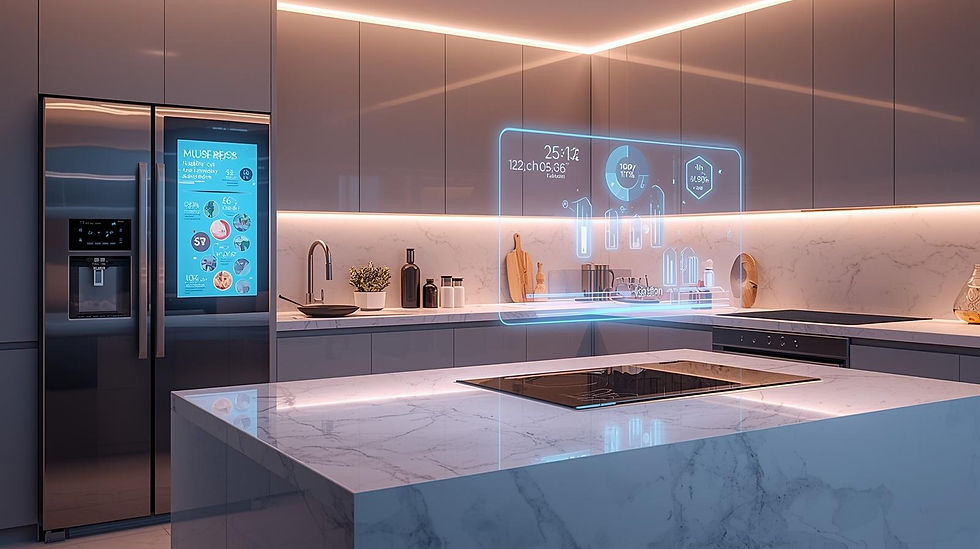
The surge in valuation is primarily fueled by a growing consumer shift toward automated living and integrated "Smart Home" environments. Beyond simple convenience, these advanced kitchens tackle pressing global issues such as food waste and energy management. Integrated sensors and live data analytics allow appliances to refine power usage, supporting international sustainability targets. With the continued expansion of high-speed connectivity and mobile technology, the capacity to manage kitchen tasks remotely—such as preheating appliances via smartphone or tracking grocery freshness—has evolved from a premium novelty into an essential feature for contemporary households.
Definition and Market Significance
A smart kitchen is a cooking space outfitted with instruments that link to the web or a localized home network. These appliances utilize Wi-Fi, Bluetooth, and voice-command technologies to offer automated tasks, remote oversight, and custom user settings. The market includes an array of products, such as Smart Refrigerators, Smart Ovens, Connected Dishwashers, and Smart Cookware.
The importance of this sector lies in its potential to revolutionize domestic chores and resource consumption. In residential settings, smart kitchens facilitate superior inventory control through internal cameras and AI-guided meal suggestions based on what is in stock. In the commercial realm, particularly for high-volume hospitality and quick-service restaurants (QSRs), smart technology is vital for controlling labor overheads and maintaining strict food safety standards through automated climate and temperature regulation.
Market Drivers
A major catalyst for this industry is the Widespread Integration of Smart Home Networks. As households increasingly adopt voice-controlled hubs like Google Assistant or Alexa, the requirement for compatible kitchen hardware has surged. Users are looking for a cohesive digital experience where they can oversee their entire living environment through a single portal, making cross-device compatibility a deciding factor in new purchases.
Rising Interest in Energy Conservation and Sustainability is another critical growth factor. Intelligent appliances feature sophisticated power-saving modes that can coordinate with smart grids to function during lower-cost, off-peak hours. Furthermore, refrigerators with AI-driven freshness tracking help combat global food waste, attracting environmentally aware consumers eager to reduce their household's environmental impact.
Market Trends
A prominent trend currently shaping the industry is the Application of AI for Intuitive Cooking. Modern smart ovens are now equipped with AI-enhanced cameras and proactive support systems that identify ingredients and automatically select the best cooking duration, temperature, and technique. This innovation simplifies complex culinary tasks, allowing even novice cooks to achieve professional-grade results.
Another significant movement is the Growth of Hands-Free Operation and Voice-Based Commerce. With the advancement of speech recognition, individuals can now replenish grocery stocks directly through their appliance interfaces or adjust heat levels and timers using only vocal commands. This trend is especially popular in active, multi-tasking households where touchless controls enhance both cleanliness and workflow during meal preparation.
Market Restraints
Despite the strong growth outlook, High Upfront Costs and Data Privacy Risks continue to pose challenges. Advanced kitchen technology can be significantly more expensive than standard models, creating a barrier in price-sensitive regions. Additionally, because these systems gather extensive data on household habits, consumers are becoming more concerned about potential cybersecurity vulnerabilities. The risk of data breaches through unshielded IoT connections remains a deterrent for privacy-focused market segments.
Market Opportunities
The Evolution of Assisted Living and Aging-in-Place Solutions offers a massive, untapped niche. Smart kitchen tools with safety enhancements—such as auto-off stove sensors, water leak detectors, and simplified voice controls—enable elderly users to live independently for longer. Additionally, there is a significant opportunity for manufacturers to develop budget-friendly, compact smart devices designed specifically for urban "micro-apartments" to capture the growing interest of younger, metropolitan demographics.
Segmentation Analysis
The global smart kitchen market is categorized into several key areas to highlight its various revenue channels:
By Product Type: Smart Refrigerators (Leading segment), Smart Ovens, Smart Dishwashers, Smart Cookware & Cooktops, and others.
By Application: Residential Use (Largest market share) and Commercial Use (Hospitality, QSRs, and Institutions).
By Connectivity: Wi-Fi (Primary technology), Bluetooth, and new protocols like Thread/Matter.
By Distribution Channel: Online Retail (Fastest expansion) and Offline Retail (Specialty outlets and Mass Market retailers).
Regional Analysis
North America is positioned to lead the global market, anticipated to hold a 37.9% share of revenue in 2025. Specifically, the US Smart Kitchen Market size is projected to reach USD 8.0 billion in 2025, growing at a compound annual growth rate of 18.5% over the analyzed timeframe. This leadership is driven by high purchasing power, early tech adoption, and the dominance of major manufacturers like GE Appliances and Whirlpool.
Europe is also a major contender, with a projected market size of USD 6.8 billion in 2025 and an expected CAGR of 18.8%. This growth is largely stimulated by strict environmental regulations and a strong preference for "Green Kitchen" innovations. Meanwhile, the Asia-Pacific region is noted as the fastest-growing territory, fueled by rapid urban development in India and China and an expanding regional middle class.
Download a Complimentary PDF Sample Report
Competitive Landscape
The competitive field is defined by constant innovation and strategic alliances between traditional hardware brands and software developers. Key industry participants are working to establish "Unified Operating Platforms" to solve the challenge of fragmented device connectivity. Notable leaders in this space include:
Samsung Electronics
LG Electronics
Whirlpool Corporation
BSH Hausgeräte GmbH (Bosch)
Electrolux AB
Haier Group
Panasonic Corporation
Future Outlook
The next phase of the smart kitchen will center on Personalized Nutrition and Autonomous Preparation. By 2034, when the market is expected to hit USD 126.9 billion, appliances will likely act as automated nutritionists—connecting with wearable fitness data to recommend meals tailored to a user’s specific health requirements. The move toward "Meal-Prep Robotics" and deeper integration with Smart City grids will change the kitchen from a simple utility room into a proactive center for health and wellness.
FAQs
What is the projected value of the global smart kitchen market by 2034? The market is expected to reach a total value of USD 126.9 billion by 2034.
What is the anticipated market valuation in 2025? The global industry is projected to be worth USD 25.1 billion in 2025.
What is the CAGR for the smart kitchen market from 2025 to 2034? The industry is forecast to expand at a CAGR of 19.7%.
Which region currently holds the largest share of the smart kitchen market? North America is forecast to account for a 37.9% share of the total market revenue in 2025.
What is the projected size of the US Smart Kitchen Market in 2025? The US market is estimated to reach USD 8.0 billion in 2025.
Summary of Key Insights
The Global Smart Kitchen Market is set for an extraordinary decade of growth, rising from USD 25.1 billion in 2025 to USD 126.9 billion by 2034 at a 19.7% CAGR. While North America remains the primary revenue driver, the market is globally propelled by AI integration, sustainability initiatives, and the residential demand for automation. Despite obstacles such as pricing and security concerns, the movement toward intelligent, health-focused, and efficient cooking spaces is firmly established.


Comments